Hubstero staff review, published August 2026. We checked TheSindi com directly and cross-referenced the surrounding coverage before writing this, see the pattern we found below.
Eight, at last count. Maybe more by the time you read this.
TheSindi com is a real, active general-interest content site publishing articles across technology, business, finance, health, education, lifestyle, and travel. It’s not a scam. That’s the easy part. The genuinely interesting part is that at least eight nearly identical “review” articles about it have popped up in the last few months, several on sites with zero real connection to the topic. Tells you more about how search content gets manufactured these days than it does about the site itself.
What TheSindi com Actually Is

Calls itself an independent digital publication. Wide range of subjects: technology, business, finance, health, education, lifestyle, travel, home improvement, real estate. The site runs explainer-style articles, practical guides, general-interest pieces, built for readers who want a plain-language overview rather than a deep technical dive. Structurally, works the way most general-content sites do. Browse or search. Open an article. Read it. Click into something else if it catches your eye.
Legitimate format. Common one too. Plenty of respected publishers run some version of it, and plenty of low-effort content operations do as well. Format alone won’t tell you which one you’re looking at. Execution does that.
The Part Nobody’s Really Explaining: The Review Swarm Itself
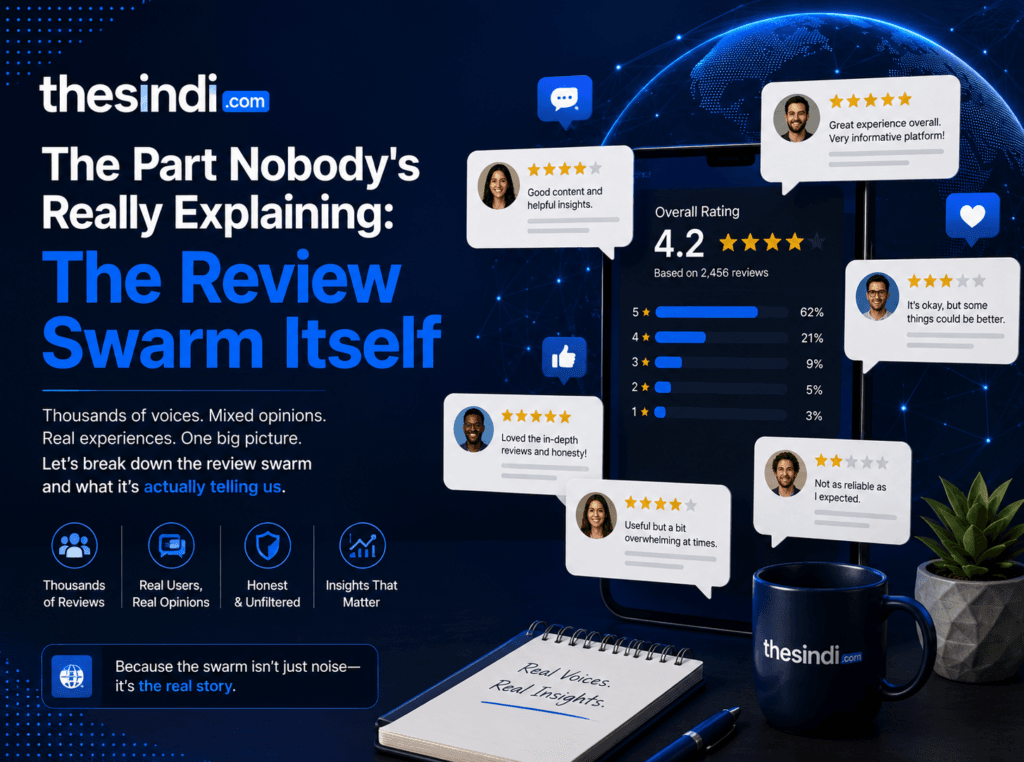
Here’s what actually stood out digging into this. Search “TheSindi com review,” and a cluster shows up. All published within roughly the same few-week window. All leaning on strikingly similar structure, a “legit or scam” framing, a pros-and-cons list, a trust-signals table, an evaluation checklist, a conclusion landing on nearly identical wording about using the site “as a starting point, not a final source.”
One of these, on a site whose actual focus is home décor of all things, even flags the pattern directly. Notes that a lot of TheSindi coverage is itself “generic, templated SEO content.” True observation, that. Also being made by an article following the exact template it’s describing, written by an author whose other recent posts on the same site cover a string of unrelated brand names, identical structure just swapped in each time.
Worth naming plainly: a real site picks up a bit of search interest, and a wave of templated “review” content shows up built to rank for its name, often from operations with no genuine connection to the subject at all. Common pattern across the web right now. Big reason searching an unfamiliar site name so often turns up a dozen pages that all somehow say the same vague things.
We ran into the same mechanism with Incfidelibus, a term with no real substance behind it that still managed to generate a wave of confident-sounding “explainer” content. Different subject, same underlying pattern: search volume attracts content regardless of whether there’s anything real to say.
So Is TheSindi com Actually Trustworthy?
Depends what you mean by trustworthy. As a functioning, non-malicious website? Nothing points to anything deceptive. No phishing behavior. No fake storefront. No forced downloads. As a source you’d actually cite for something important? Real gaps show up. No visible named authors or editorial credentials. Minimal citation of primary sources. No publicly documented ownership anywhere.
None of that makes it unusual for a general-content site, to be fair. Just means the honest answer lands somewhere around “fine for a quick overview, not for anything with real stakes attached.” Happens to describe most sites in this category, not just this one.
A Real Framework for Evaluating Any Site Like This
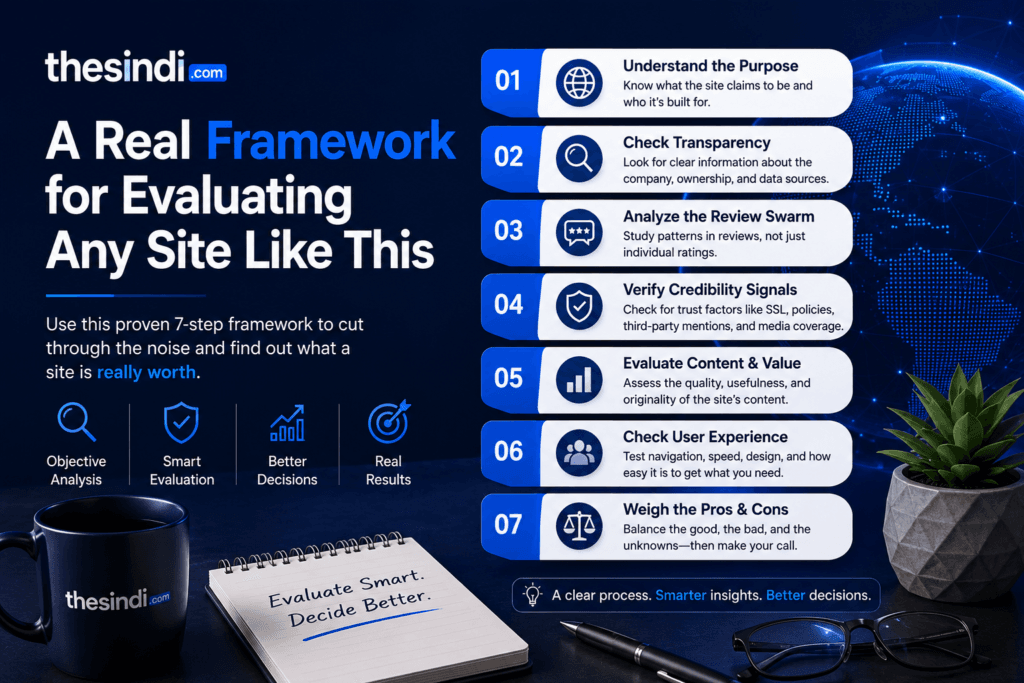
Rather than repeat the same checklist showing up everywhere else, here’s what’s actually worth checking. Pulled from established source-evaluation guidance, not invented on the spot.
Check whether the article names an author, and whether that byline turns up elsewhere with any kind of track record. Look for links to primary sources, original studies, government data, official statements, rather than confident-sounding claims standing alone with nothing behind them. Note the publish or last-updated date, especially for anything tech, finance, or health related, since those fields shift fast. And for anything genuinely important, cross-check against an official source instead of leaning on any single general-content article. This one included, for what that’s worth.
The University of California, Berkeley’s library guide on evaluating web pages walks through this exact kind of checklist in more depth, applies just as well here as it does to academic research. Cornell University’s library similarly breaks down how to distinguish scholarly, general, and questionable sources, useful background if you want something more structured. For the security side specifically, the FTC’s guidance on evaluating website safety covers what to watch for beyond just content accuracy.
Who TheSindi com Actually Works For
Casual readers after a plain-language starting point on something unfamiliar, sure. Students doing early-stage research before moving to primary sources, also fine. Anyone who’d rather have a range of subjects in one place than bookmark five separate specialist sites, that works too. Not the right pick as a sole source for financial, medical, or legal decisions, though, not even close. Treat it like any general-content site. Step one. Not the final word.
Frequently Asked Questions
Is TheSindi com legit or a scam? Real, active content site, no evidence of scam or phishing behavior. Functions as it presents itself, a general-interest publisher, though it lacks the editorial transparency of a credentialed news outlet.
Why are there so many review articles about TheSindi com? A cluster of nearly identical review articles appeared within a short window across largely unrelated sites, typical of templated SEO content built to rank for a trending name rather than organic reader interest or genuine expertise on the subject.
Can I trust the information published on TheSindi com? For general, low-stakes topics, reasonable starting point. For anything involving money, health, or legal decisions, verify the specifics against an official or specialist source before acting.
Who runs TheSindi com? Ownership and editorial team details aren’t publicly documented on the site. Transparency gap worth knowing, though not, on its own, evidence of anything malicious.
Bottom Line
TheSindi com is exactly what it presents itself as. A real, general-interest content site covering a wide spread of everyday topics in plain language. Useful for a quick overview, limited as a source for anything carrying real stakes. The more interesting story, honestly, is the wave of near-identical reviews that showed up to describe it. Worth remembering next time an unfamiliar site name turns up a dozen articles that all somehow say the same thing.