
Voozon is not a single product. The name is currently used by at least five unrelated platforms: a social media app, a business SaaS tool, a general content blog, a guest-posting site, and a “task-based” earning platform that shows several common scam-pattern warning signs. That’s the short version.
Here’s the longer one, and it’s genuinely a mess.
Five different things. One name. None of them mention each other, none of them acknowledge the confusion, and if you searched “what is Voozon” hoping for a tidy answer, well, sorry, this is going to take a minute. Better a real answer than a fake short one, though.
Let’s actually walk through what’s going on here, one version at a time, and which ones deserve a second look before you sign up for anything.
Meet the Five Voozons
There’s a social media app first, sitting on Google Play, pitched as your standard connect-share-chat kind of thing. Feed, messaging, follow people, discover trending posts. Nothing weird here. Reads like fifty other apps chasing the same idea.
Then a content site, publishing across tech, business, lifestyle, whatever. No real niche. You show up, read something, leave. Low stakes, honestly, since nobody’s asking for your card details to browse an article.
Third is a business platform, the kind promising marketing tools, CRM, analytics, all bundled into one dashboard so small teams stop juggling five different logins. Crowded space already, plenty of names doing this exact pitch.
Fourth, and here’s where I’d actually pump the brakes, something calling itself a “task-based” platform. Vague on purpose, it seems, wrapped in language about “opportunities” and heavy on reassuring you it’s safe and legitimate. That defensiveness is itself worth noticing. Real platforms don’t usually have to work this hard convincing you they’re real.
Fifth, a guest-posting site, taking articles across a handful of categories, tech and health and finance mixed under one roof.
Five names. One word. Not one of them points back to any of the others.
Quick Comparison: All Five Versions Side by Side
| Version | What It Claims to Be | Risk Level | Independent Verification |
|---|---|---|---|
| Social media app | Photo sharing, messaging, feed, community | Low | None found |
| Content/info blog | Multi-topic articles, general reading | Very low | None found |
| Business SaaS platform | Marketing, CRM, analytics dashboard | Low to moderate | None found |
| Task-based platform | “Opportunities,” task completion, rewards | High | None found |
| Guest-posting site | Accepts articles across niches | Low | None found |
Look at that last column. Same answer, every row. That’s really the throughline of this whole thing, not that any one version is confirmed bad, just that nothing here has anything backing it up beyond its own word.
Here’s the One I’d Genuinely Slow Down On
That fourth version, task-based engagement, whatever that phrase is dancing around, follows a shape that’s painfully familiar from online reward and task scams. Easy money for simple tasks, that pitch. And its own review content spends a strange amount of energy insisting it’s safe and legitimate, which, again, is a bit of a tell on its own.
Not calling it a scam outright. Don’t have enough to say that with confidence, and honestly, nobody writing about it right now does either. But if you land on something matching this description, promising tasks or rewards for signing up, treat it the way you’d treat any unverified earning site. Skip the early payment details, skip any “activation” or “unlock” fee, and go hunting for real user feedback somewhere that isn’t the platform’s own pages.
Task-Based Version: Pros and Cons
| Pros | Cons |
|---|---|
| Easy signup, low barrier to try it | Own marketing spends unusual effort defending its legitimacy |
| No cost mentioned to browse or look around | “Task-based” and “opportunities” language matches known scam patterns |
| Might genuinely be a small, harmless platform | Zero independent reviews or user testimonials found anywhere |
| — | No clear company details, ownership, or contact information |
The Business Platform and the Social App
Both feel a lot more ordinary on paper. The business version lists features every legitimate SaaS tool in this category lists; nothing alarming there. Same with the social app: standard feed-and-chat functionality, nothing that stands out as unusual.
The problem’s the same one showing up everywhere in this article, though. No independent reviews. No visible company info. No coverage from anybody who isn’t the product itself talking about itself. Doesn’t make either one dangerous. Just means you’re taking their word for it, for now.
Social Media App: Pros and Cons
| Pros | Cons |
|---|---|
| Available through official Google Play Store | Brand new, no established user base visible |
| Standard, familiar feature set | No independent app reviews from tech publications |
| Free to download and try | Privacy practices unverified beyond the app’s own claims |
Business SaaS Platform: Pros and Cons
| Pros | Cons |
|---|---|
| Bundles common business tools in one dashboard | Competing against established, proven platforms in the same space |
| Feature list matches legitimate SaaS category norms | No visible pricing transparency |
| Could save smaller teams money if features work as described | No case studies, testimonials, or client names anywhere |
What About the Guest-Posting and Blog Versions?
Lower stakes, both of them, since you’re either reading or submitting a piece, not handing over money upfront. If you’re a writer eyeing the guest-posting side specifically, vet it like you’d vet any unfamiliar publishing opportunity. Check if they’re actually publishing regularly, see if existing posts read like real writing or filler, and make sure there’s no sneaky “publishing fee” attached; legit sites generally don’t charge writers to appear.
Guest-Posting Platform: Pros and Cons
| Pros | Cons |
|---|---|
| Covers multiple niches, wider topic flexibility | Unclear editorial standards or review process |
| Low risk, no payment or personal data required to explore | No visible domain authority or traffic data available |
| Could be a genuine opportunity for newer writers | Content quality across the site looks inconsistent in places |
Content/Info Blog: Pros and Cons
| Pros | Cons |
|---|---|
| Free to read, no signup required | Content covers too many topics to build real subject-matter authority |
| Regularly updated, based on what’s visible | No named authors or editorial team listed |
| Mobile-friendly, easy to browse | Reads similarly to other SEO-farm content sites |
So Which Voozon Are You Actually Dealing With?
Whichever one you clicked into. Genuinely, that’s the whole answer. Nothing ties these five together, no shared ownership, no cross-reference, no acknowledgment that any of the others exist. Best guess, and it’s the same story we keep running into with names like this: a short, catchy, available word gets grabbed independently by a handful of unrelated projects, and search engines just mash it all together under one query.
Judge each version entirely on its own. Trusting the social app tells you nothing useful about the task-based platform. Don’t let one bleed credibility into the other just because the spelling matches.
A Simple Way to Check Before You Commit to Any Version
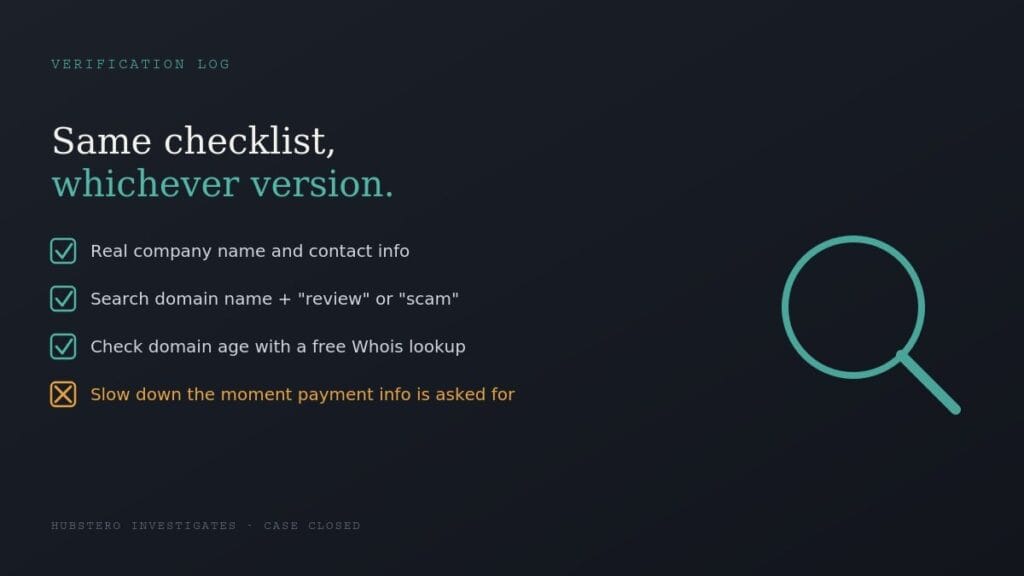
Whatever version you’re staring at, run it through the same basic checks. Look for a real company name, a physical address, contact info that isn’t just a generic form. Search the exact domain alongside “review” or “scam” and see what turns up beyond the platform’s own pages. Check the domain’s actual age; a free Whois lookup takes ten seconds. And the moment money, payment info, or personal data enters the picture, slow way down before typing anything in.
None of this guarantees safety either way. But it beats trusting a name just because it sounds familiar or well put together. For a broader, official rundown on spotting income and opportunity scams specifically, the FTC’s consumer guide on avoiding income scams covers exactly the warning signs showing up in that task-based version of Voozon.
Not the first time we’ve run into this exact mess, either. Trucofax turned out to be at least four unrelated products sharing one name, including its own red-flag “free rewards” pitch worth comparing side by side with this one.
Frequently Asked Questions About Voozon
What is Voozon?
Voozon refers to at least five unrelated things: a social media app, a business SaaS platform, a general content blog, a guest-posting site, and a task-based web platform. There’s no single confirmed product the name officially belongs to.
Is Voozon safe?
Depends entirely on which version. The social app and business platform look like standard, low-risk products on paper, though neither has independent verification yet. The task-based engagement version deserves real caution; its own messaging spends unusual effort defending its legitimacy, which is worth paying attention to.
Is Voozon.com legit?
There isn’t one single Voozon.com; different descriptions point to different platforms using similar domain names. Check the specific site you’re looking at individually rather than assuming legitimacy carries across versions.
Does Voozon accept guest posts?
One version of Voozon is described as a multi-niche content platform that accepts guest posts across categories like tech, business, and health. As with any guest-posting opportunity from a site without an established reputation, verify their published content and confirm there’s no fee involved before submitting anything.
Is Voozon a scam?
Nothing confirms any version is an outright scam, but the “task-based engagement” version shows several common warning signs associated with online task and reward scams. The other versions, social app, business platform, blog, and guest-posting site, don’t show the same red flags, though none have independent verification either.
Conclusion
“Voozon” isn’t a company. It’s a name that at least five unrelated projects happened to land on separately. Figure out which one you’re actually looking at before deciding anything about it; trust doesn’t carry over just because the spelling matches. The social app and business platform read as fairly ordinary, unverified but not alarming. The task-based version is the one I’d genuinely slow down on. And if you’re a writer eyeing the guest-posting angle, vet it the way you’d vet any unfamiliar publishing opportunity, carefully, and before you send anything.