Every brand selling a titanium cutting board made in USA swears it’s American-made. Search around for ten minutes and you’ll notice they don’t all mean the same thing by that. So what’s the real story?
Most of these boards aren’t made from scratch on US soil. The titanium comes from somewhere else. A US company finishes it, assembles it, checks it, then ships it out. Nothing shady about that, it’s just how the supply chain for this metal works. Worth knowing before you spend money on one though.
Below: what these boards actually are, what “Made in USA” is really telling you, how people spot the fakes, and how titanium holds up against wood, plastic, and steel.
What Is a Titanium Cutting Board?
A cutting surface made from titanium instead of wood, plastic, bamboo, or glass. That’s the whole idea.
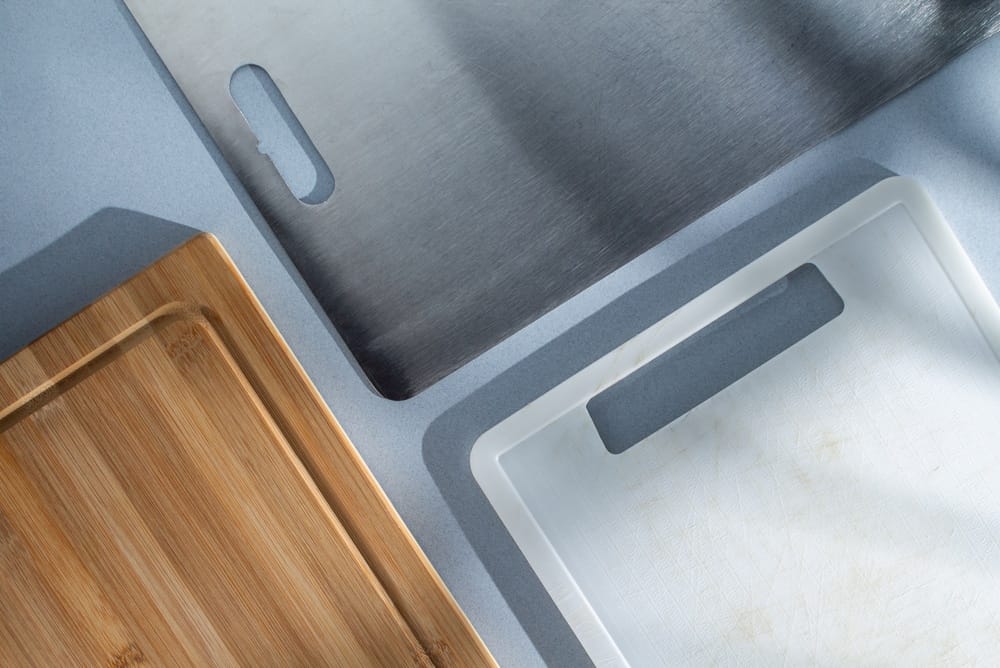
People switch for a few reasons. No grooves for bacteria to hide in, since the surface doesn’t have pores the way wood does. Surgeons use titanium in tools for a reason, and that same quality carries over here. Garlic and fish smells don’t linger on it the way they do on a wooden board. It won’t warp or crack either, which wood and plastic both eventually do.
There’s also the strength-to-weight thing. Titanium is strong without being heavy, so a board can feel sturdy without weighing down your kitchen drawer. And it’s non-magnetic. Remember that one, it becomes useful in a minute.
Not every board calling itself titanium actually is one though. More on that below.
Is “Made in USA” Titanium Actually Mined in America?
Rarely. The US barely mines raw titanium at all. Most of it comes out of the ground somewhere else entirely.
So “Made in USA” on the label usually means one of two things. Sometimes the whole thing, metal included, really is built domestically start to finish, though that’s uncommon for titanium specifically. More often, the raw material ships in from elsewhere and a US company handles the finishing, the assembly, the quality checks, and the customer support.
Neither version is a red flag by itself. The problem shows up when a brand won’t say which one applies to them.
How to Check If a Titanium Cutting Board Is Real
This matters more than the country-of-origin label ever will, frankly. Real titanium costs money to produce and isn’t easy to shape, which is exactly why some “titanium” boards turn out to be steel with a thin coating slapped on. Some don’t have any titanium in them at all.
A magnet test settles it fast. Titanium won’t stick to one; steel will. Weight tells you a lot too, since real titanium feels noticeably lighter than steel of the same size once you’ve held both side by side. Look for a stated purity grade on the listing, something specific like Grade 1 at 99.89% pure, not just the bare word “titanium” printed on a box. And if a board is priced way under everything else claiming the same purity, that’s not a deal. That’s a warning sign.
“This kind of verification-before-you-buy approach matters everywhere, not just cutting boards — we ran into the same issue while reviewing NippyBox’s cloud storage claims, where marketing language and actual product specs didn’t always line up either.”
Titanium vs. Wood vs. Plastic vs. Steel
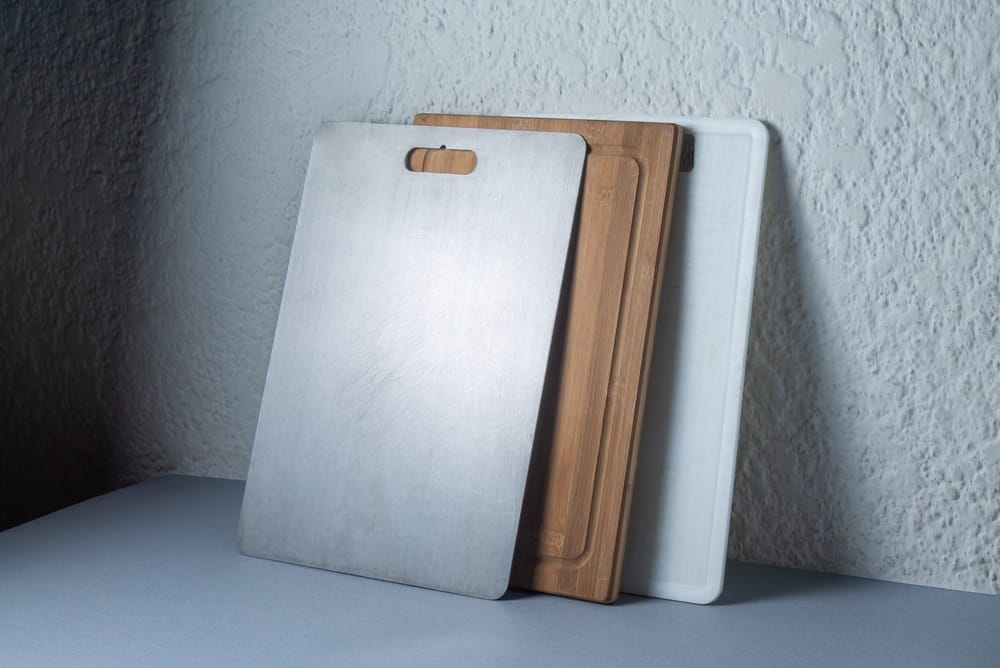
| Material | Bacteria Resistance | Gentle on Knives | Durability | Price |
| Titanium | Highest | Moderate to High | Very High | High |
| Wood | Low to Moderate | Best | Moderate | Low to Moderate |
| Plastic | Low | Moderate | Low | Low |
| Stainless Steel | High | Worst (dulls knives) | High | Moderate to High |
Pros and Cons of a Titanium Cutting Board
The good stuff first. It stays clean easily since nothing soaks into a non-porous surface, no odors, no stains, no trapped moisture. It lasts far longer than wood or plastic will, and most versions go straight into the dishwasher without issue, though check your specific board to be sure.
Now the trade-offs. You’ll pay more than you would for wood, bamboo, or plastic. Some grades are a little tougher on knife edges. It’s louder under a knife than wood too. And because fake titanium boards are everywhere, you can’t just grab the first one that says “titanium” and trust it blindly.
What to Look for Before You Buy
An actual purity grade printed somewhere on the listing, not just the word titanium by itself. Clear information about where the board gets made and finished. A return window of 30 days or longer, which tends to signal a seller that stands behind what they sell. Thickness matters too since a thin board flexes more under a hard chop. Check whether it’s titanium on both sides or just one, since some pair it with wood-fiber or composite on the back. And reviews mentioning real tests, magnet checks, XRF scans, lab certification, carry a lot more weight than a stack of five-star ratings with no detail behind them.
How to Take Care of a Titanium Cutting Board
Give it a wipe after you use it, that’s really all it asks for. If you hand-wash instead of tossing it in the dishwasher every time, the surface stays looking good a lot longer, even on models rated dishwasher-safe. Don’t use it to open packages or do random non-kitchen stuff either. People do this more than you’d think, and it’s how boards end up scratched for no reason. When you’re done, just stand it up or lay it flat somewhere dry so you’re not dealing with water spots later.
Frequently Asked Questions
Is a titanium cutting board better than wood or plastic?
For cleanliness and how long it lasts, yeah, pretty clearly. Wood has grooves that trap stuff, plastic sheds tiny bits over time, and titanium avoids both problems. You pay more for that though, and it feels firmer under your knife than either alternative.
Does titanium dull knives faster than wood?
Depends what grade you end up with. It’s softer than stainless steel, so your blades fare better on it than they would on steel or glass. Wood is still the gentlest option out there if blade care is your main concern.
Is “Made in USA” titanium really sourced in America?
Not usually, no. Most companies bring the raw metal in from somewhere else, then handle the finishing and assembly domestically. Brands willing to spell that out tend to be the ones worth your trust.
How do I know if a titanium cutting board is fake?
Run the magnet test. Check the purity grade. Compare the weight against something you know is real titanium. Look for brands that mention independent lab testing.
Are titanium cutting boards dishwasher safe?
Usually, but it depends on the brand and the finish. Check the care instructions for your specific board rather than guessing.
Bottom Line
A real titanium cutting board earns its price if hygiene and durability matter to you. Don’t let “Made in USA” do all the convincing by itself though, since it usually just means the board got finished and supported here, not mined here. Purity grade, honest manufacturing details, a decent return policy. Get those three right and you’ll end up with a board worth what you paid for it.