Short answer: Can AI tailor my resume to a job posting? Yes, it absolutely can, and when used correctly, it can make a real difference in how many interview calls you get.. The thing is, this tool can be really good at what it does if you know how to use it. The longer answer is actually more helpful because making a resume with the help of Artificial Intelligence is not like magic or anything. It is basically just matching patterns and like any tool it works really well when you understand what is going on behind the scenes instead of just trusting whatever it gives you.
If you have ever sent a resume to a lot of job postings and never heard back then you already know why this is important. The people who look at resumes spend a short time just a few seconds looking at a resume before they decide if they want to read more. A resume that is not specific to the job usually does not make it past the look and that is where Artificial Intelligence comes in. It helps to fill the gap, between what you can really do and the specific words that are used in the job posting. Artificial Intelligence resume tailoring is meant to help with this.And uh also know the answer. Many job seekers ask can AI tailor my resume to a job posting well enough to beat ATS filters and the answer is yes.
How Can AI Tailors My Resume to a Job Posting

When you paste a job description into an intelligence tool, alongside your resume this is what is really going on behind the scenes with the artificial intelligence tool and your resume. The artificial intelligence tool is looking at the job description and your resume.
The tool reads the job posting. Finds out what skills, qualifications and responsibilities the employer wants.It then checks this list against your resume. Looks for matches, missing parts and words that do not fit.When your resume already has experience that’s relevant but you have described it in a different way than in the job posting
The tool rewrites that part using the same words, as the employer.If there are gaps a good tool will point them out instead of making up experience you do not have.According to LinkedIn’s Career Advice, keyword matching between your resume and job description is one of the top factors ATS systems use to filter applicants.
This matters because two things are happening at the time. Artificial Intelligence is trying to make resumes work with Applicant Tracking Systems. These systems look at resumes for words before a person even sees them. At the time Artificial Intelligence is also trying to make resumes work well for the human reader. The human reader is looking for things that’re relevant and they are looking very quickly. A good resume is one that works well for both the Applicant Tracking Systems and the human reader. It should not sound like it is just full of keywords, for the machine. A good resume should speak to both the machine and the human reader in a way.
What AI Tailoring Gets Right
When people ask “can AI tailor my resume to a job posting and actually do it well,”These are a few things artificial intelligence really gets right in this process.” The guide is given in the next article.
This tool catches keyword mismatches that the user would likely miss. If a job posting says “stakeholder management” and the users resume says “worked with clients” that is the skill described differently and the Artificial Intelligence is good, at spotting that gap and aligning the language of the job posting and the users resume, specifically the skill of stakeholder management.
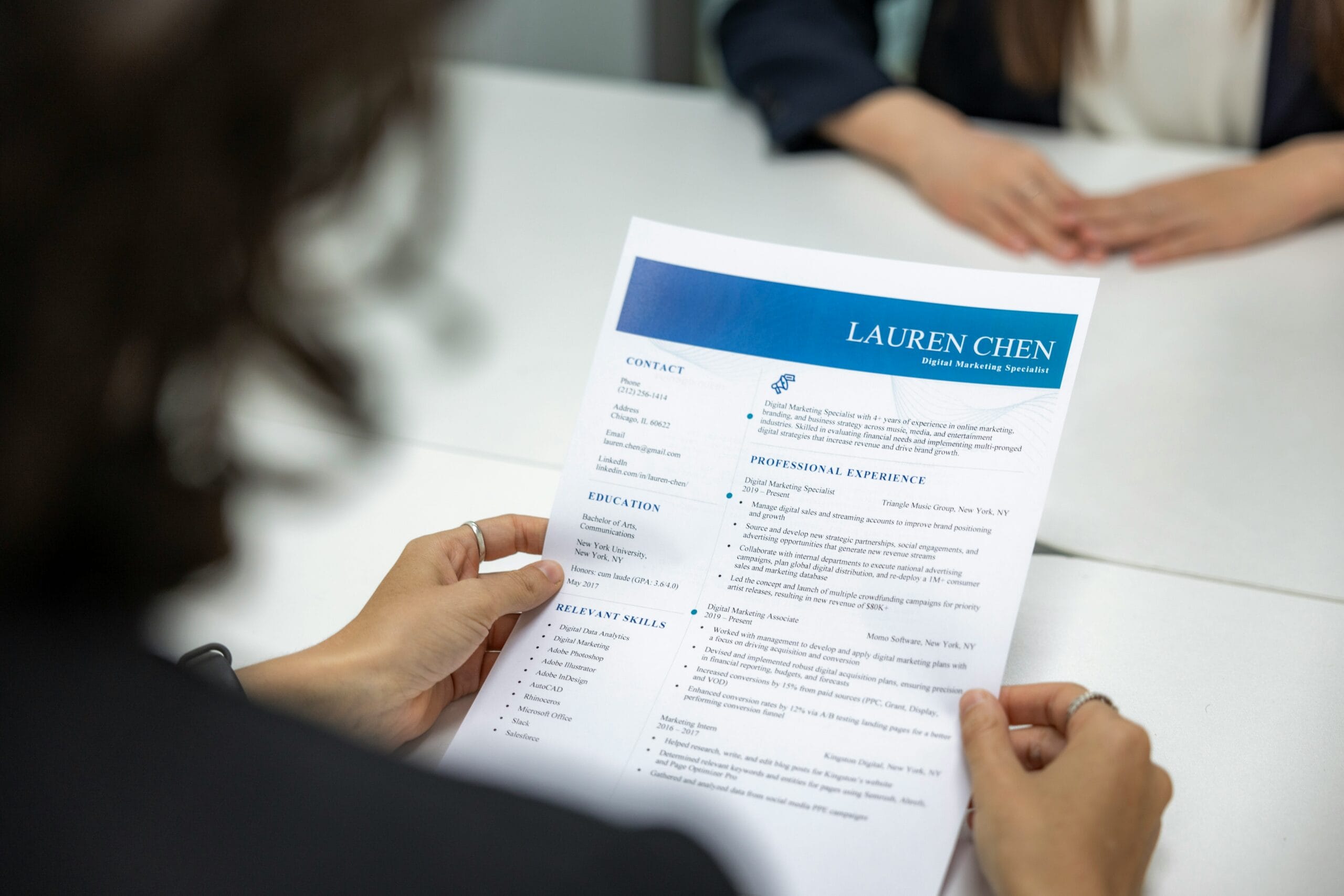
The thing about this tool is that it rearranges the content to show what is most relevant. A lot of people make a list of their experience in the order that it happened, without thinking about what the specific employer is looking for. This tool can help put the accomplishments that’re most important for the job at the top, where the person who is hiring can actually see them. The tool does this by reordering content by relevance which’s really helpful, for the employer.
It saves real time. Manually rewriting a resume, for every job application is really frustrating. Most people give up after trying a times.. With AI making your resume fit each job is fast and easy. You can do it for every application. That’s where the big advantage is.The real question most people have is can AI tailor my resume to a job posting fast enough to apply to multiple roles daily and yes, it can.
What AI Tailoring Doesn’t Do Well (And Why It Matters)
If you’re asking can AI tailor my resume to a job posting without any downsides, the honest answer is no, there are limits worth knowing before you trust it blindly.
The thing with intelligence is that it cannot tell if the things you say about yourself are really true. It just uses the information you give it. So if you make something sound better than it really is, on your resume the artificial intelligence will just make it sound even better to match what the job is asking for. That is a problem that you are causing, not the intelligence. The artificial intelligence is just doing what it is supposed to do with the information you give it about your experience and skills.
AI can also overcorrect toward keyword density.Some tools try hard to use the same words, from the job ad in a resume. This can make the resume sound unnatural or boring to a person reading it. The resume may start to sound like it was made by a machine.Good tailoring should sound like you, just focused on the right things, not like a keyword list wearing a resume’s clothing.
This thing is not good at understanding what is really going on like a person can. For example a job posting that says “paced environment” might really mean it is crazy and busy or it might just be something they say that does not really mean anything. The Artificial Intelligence does not know which one it is,. You do and that is where a quick look by a human still makes a difference. A human can tell what a job is really like. That is important. The Artificial Intelligence is not good, at this. A human needs to take a look. The job posting might say one thing. A human can figure out what it really means.
For a complete overview of AI career tools, check out our full guide on [https://hubstero.com/complete-resume-guide-2026/].
To make your resume fit a job posting that uses intelligence you need to do a few things step by step.
Many people ask can AI tailor my resume to a job posting in simple steps here is exactly how it works.
Start with one honest, complete base resume. AI tailoring rewrites and reorders, it doesn’t generate experience from nothingWhen you have a starting resume all the other versions you make from it will be good too.
Please copy the job description into your message do not just send the job title.The job description has a lot of information like what the job is, about what you will have to do what skills you need to have and what skills would be nice to have and that is what matters, not just the name of the job.
Let the artificial intelligence suggest changes. You should read every single one of them. You should accept the changes that’re accurate edit the changes that do not feel right and reject any changes that do not represent your actual experience, with the artificial intelligence.
Check the keyword match, then check it reads naturally. A high keyword score means nothing if a human reads it and feels like they’re reading a list, not a person.
Save the tailored version against that specific application. If you’re applying to several similar roles, you’ll want each version on hand rather than rebuilding from scratch.
Is an AI-Tailored Resume Still “Your” Resume ?

Yes that’s okay long as you use artificial intelligence to rephrase real experience and not create new experience.The difference is easy to understand.For example changing “managed a team project” to “led a team of six people to finish a project two weeks early” is fine.This is because the basic fact is still the same.You are just making it clearer and more relevant.The fact that you managed a team project did not change.You are still talking about the project.Only the way you say it is different.It becomes more specific and straightforward.You are using everyday words to explain what you did.The AI helps you to say it in a way.Claiming a leadership role you didn’t actually hold is something else entirely, and that’s on the person accepting the suggestion, not the tool offering it.
This is the one place where AI resume tools genuinely earn or lose trust. Tools that strictly rework your existing content are doing what tailoring is supposed to do. Tools that quietly fabricate achievements to better match a job posting are creating a liability you’ll have to answer for in an interview you didn’t actually qualify for.
The Bottom Line
So, can AI tailor my resume to a job posting in a way that actually works? Yes, and for most job seekers applying to more than a handful of roles, it’s a genuinely useful way to do something that used to take real time and motivation to do manually. The tools are good at matching language, surfacing relevant experience, and beating keyword-based ATS filters. So next time someone asks can AI tailor my resume to a job posting the answer is yes, but only as well as the person using it allows it to. What they’re not good at is judgment, so the final read-through is still yours to do. Use AI to do the heavy lifting on language and structure, and use your own judgment to make sure what comes out the other end is still, honestly, you.If you have been wondering can AI tailor my resume to a job posting better than I can manually the answer is yes, for speed and keyword alignment, but you still need to review the final output.